Anglais – Comprendre art et pouvoir : création, propagande, contestation
Être capable d'expliquer en anglais, avec le vocabulaire adapté, comment un pouvoir utilise l'art pour se légitimer (propaganda) et comment des artistes le contestent (protest art), en distinguant ces deux fonctions.
Les points essentiels
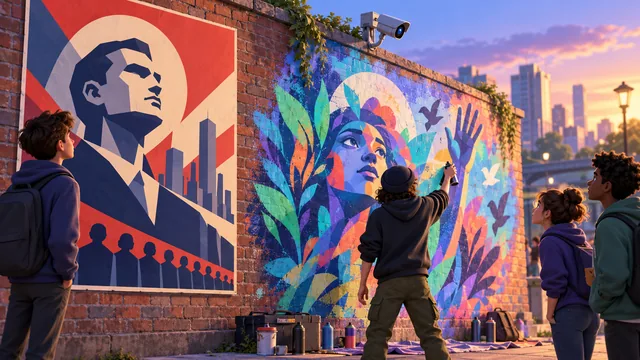
- Le thème « art et pouvoir » interroge la relation entre les artistes (artists) et ceux qui gouvernent (the authorities, the government, the regime) : l'art peut servir le pouvoir ou lui résister.
- La création (creation, artwork, to create) désigne l'acte de produire une œuvre : affiche, peinture, chanson, film, mural, photographie. Le verbe to create et le nom artwork (jamais « artworks » au sens d'une seule œuvre) sont à maîtriser.
Les mots à connaître
- propaganda
- Information ou images, souvent biaisées, diffusées de façon systématique par un pouvoir pour influencer l'opinion et glorifier un régime. Nom indénombrable : « Propaganda was everywhere in the streets ».
- protest art
- Œuvres (chansons, affiches, graffitis, performances) créées pour exprimer un désaccord avec le pouvoir ou pour dénoncer une injustice. Exemple : a protest song, a satirical cartoon.
Un exemple pour comprendre
Document : an affiche (poster) shows a smiling leader looking towards the horizon, with workers behind him and the slogan « Together we build the future ». Explain in 3 or 4 sentences in English what kind of document it is and what it aims to do.
Réponse type : « This poster is an example of propaganda. The leader is shown in a heroic way: he smiles and looks at the future, which makes him seem confident and reliable. The workers behind him suggest that the people support him. The aim is to persuade citizens that the government is working for their well-being. » Méthode : on nomme le type de document (propaganda), on relève deux indices visuels (posture, foule derrière), on formule l'intention avec « the aim is to + verbe ».